
Wellness Insights
- Home
- Wellness Insights
- Is a Healthy Liver Really Key to Staying Disease-Free?
2022.03.25
Wellness InsightsA Healthy Liver: Does It Really Reduce Illness?
Pharmacist Kuo, Kuo-Hua (Former Professor, Kaohsiung Medical University)
Recently, the COVID-19 pandemic has caused significant global loss of life and economic impact. Countries worldwide have actively developed vaccines to stimulate antibody production for viral defense, or promoted mask-wearing to prevent infection via the mouth and nose.
However, why do some people remain asymptomatic after infection, some test positive for viral RNA but are not contagious, while others develop mild symptoms and some experience life-threatening illness? These individuals were not vaccinated, yet exhibited varying disease courses. Differences in viral load explain part of the variance, but chronic diseases or age alone cannot fully account for it.
In fact, the key factor often lies in liver function. When the liver is impaired, the immune system’s defense declines. If the liver cannot block viral invasion at the frontline, infection may worsen.
Viruses primarily invade through exposed mucosal tissues, such as the mouth, nose, eyes, lungs, and skin wounds. Through the blood circulation system, all blood passes through the liver for filtration and detoxification. The common saying, “A healthy liver makes life colorful; a healthy liver reduces the likelihood of illness,” indeed has scientific support.
When considering immunity, many immediately think of antibodies, but antibody production represents the body’s second line of defense. The liver is the body’s first-line immune defense organ and also the largest component of the reticuloendothelial phagocytic system (RES).
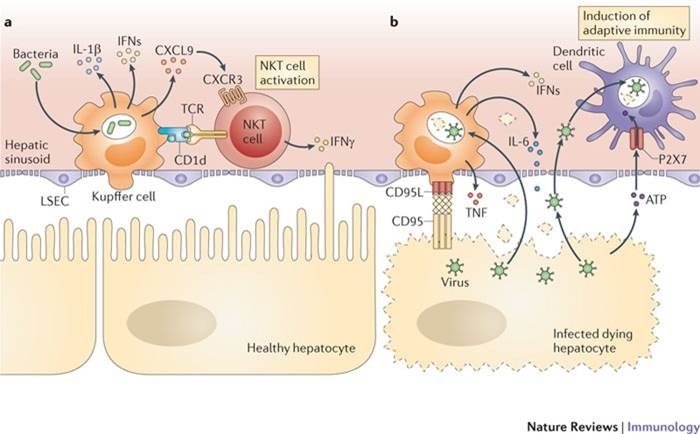
The liver contains a large population of immune cells called Kupffer cells. These are specialized macrophages derived from monocytes that reside along the sinusoidal walls of the liver.
Under normal conditions, Kupffer cells identify and engulf aging red blood cells, breaking down hemoglobin into globin for amino acid reuse, while heme is decomposed into iron ions and bilirubin. The iron ions are recycled into ferritin for new hemoglobin synthesis, and bilirubin is excreted via bile.
When foreign invaders such as bacteria or viruses enter, Kupffer cells in the liver immediately initiate phagocytosis to eliminate pathogens at the earliest stage. If the load is too great to fully clear, they release signals to activate the second line of defense: interferons and natural killer (NK) cells, which collectively combat the invaders, eventually triggering antibody production.
Therefore, maintaining good liver function ensures that the first-line immune defense operates effectively, which is fundamental to health. “A healthy liver makes life colorful; a healthy liver reduces the likelihood of illness” indeed has scientific basis.
DEING Bio reminds you: the liver acts as the body’s gatekeeper. Maintain a regular lifestyle and healthy diet, avoid hepatotoxic substances, and monitor liver function regularly to stay healthy.